My Favorite Works At The Palm Springs Art Museum
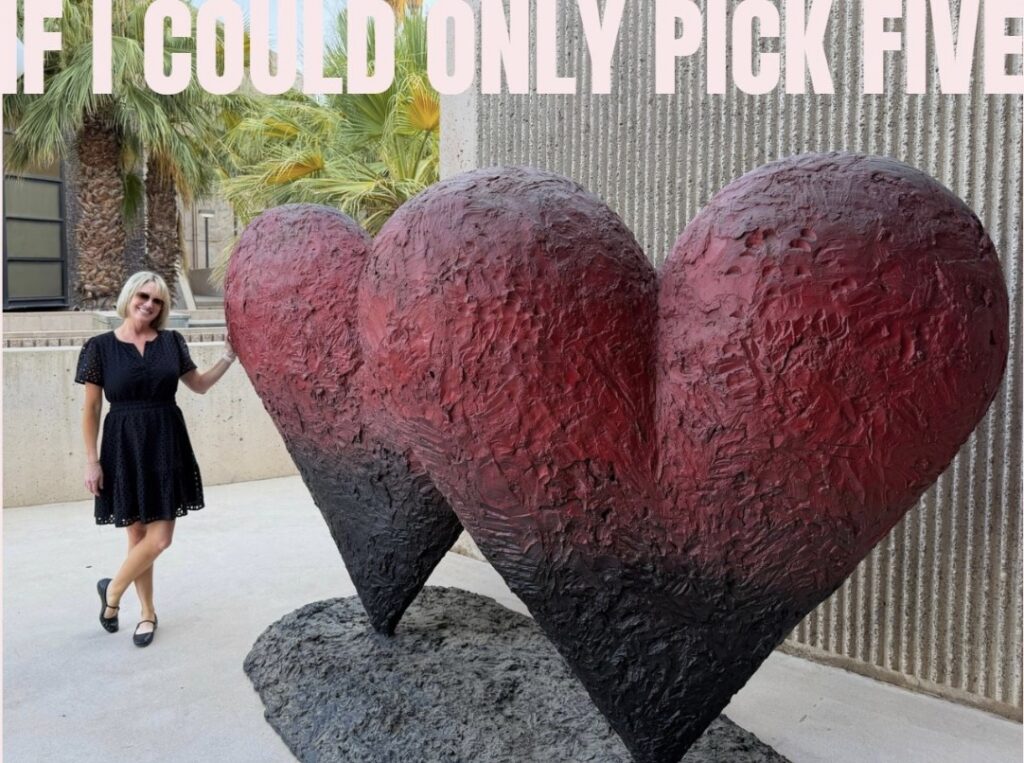
I brainstorm newsletter ideas far in advance—sometimes months or even years ahead of time. This week’s topic has apparently been on my list for way too long, because when I popped by the Palm Springs Art Museum last week to snap photos of my five favorite installations, a friendly docent informed me that the Steve Chase Wing (aka the entire third floor) would soon be closing to make way for a new exhibition, taking two of my most-loved pieces along with it.
So I had to regroup. Fortunately, that wasn’t terribly difficult. While I’ll certainly miss Duane Hanson’s Old Couple on a Bench and Robert Therrien’s untitled tower-of-plates sculpture, there are plenty more favorites to choose from.
I should preface this by saying I’m no art historian—and I wouldn’t pretend to be. I’m drawn to pieces that make me stop, look twice, and smile, which probably explains why my favorites tend to skew a little more whimsical.
So, if I could only pick five, these are the works I’d choose.
XO, Lindsay
MARJORIE EDRIS CHANDELIER
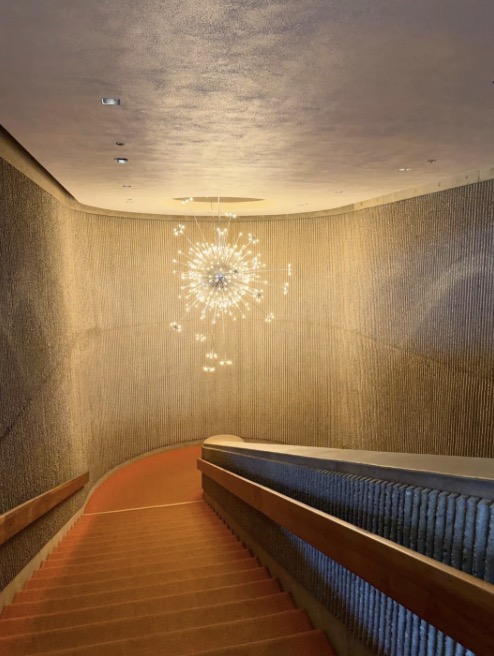
“Look up!” It’s advice Henry Golding gives in Last Christmas, one of my favorite holiday movies—and it’s exactly what I recommend upon first stepping inside the main lobby. Dangling above the staircase leading to the lower level is one of the museum’s most dazzling sights: a starburst-style, Sputnik-inspired chandelier that is not to be missed. The gorgeous piece boasts 365 light bulbs—one for each day of the year—and was designed by E. Stewart Williams, the same architect who designed the museum itself, as well as the desert’s fabled Edris House for William and Marjorie Edris. The chandelier has been in place since the museum’s opening day, donated by Marjorie in honor of her husband, who passed away several years prior.
TWIN 6′ HEARTS
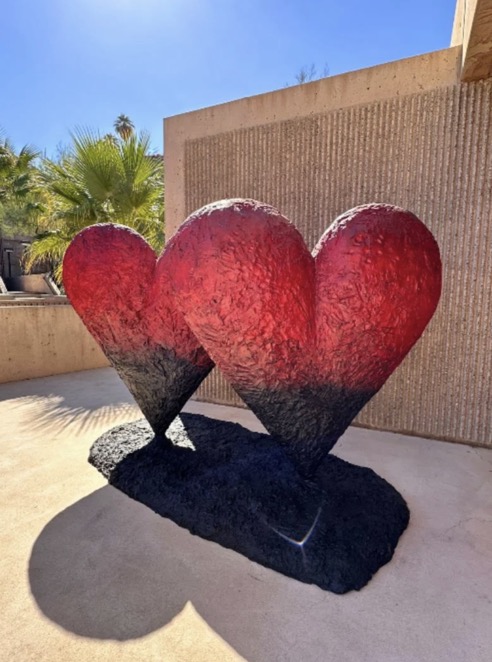
I am a hopeless romantic and love pretty much anything pink, red, or heart-shaped. So when I spotted these bulbous sculptures standing outside the Marks Administration Building overlooking the north parking lot, I was immediately smitten. Created by visual artist Jim Dine, the six-foot-tall bronze pieces are painted in vibrant ombré shades of red, making for a wonderfully whimsical welcome to the museum. A man after my own, ahem, heart, Dine is a self-described “romantic artist,” with heart motifs recurring regularly throughout his life’s work. Fun fact: the sculptures are covered in imprints of Jim’s hands, adding a personal touch to the larger-than-life pieces.
SPIDER II
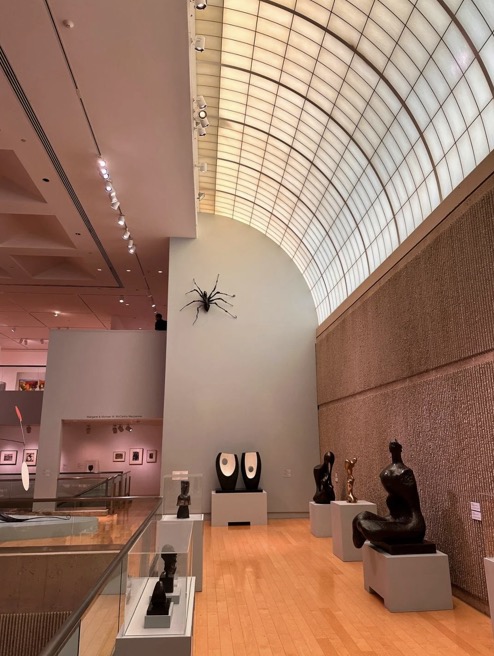
At the risk of sounding utterly basic, I am absolutely obsessed with Halloween, especially when it comes to decorations. The creepier and crawlier, the better. So it’s no surprise that this massive arachnid, crafted in bronze by Louise Bourgeois in 1995, calls to me every time I visit the museum. The unusual positioning—its sinewy, roughly six-foot-wide body seemingly cascading up the side wall of the James and Jackie Lee Houston Atrium—only adds to its intrigue. Shockingly, the piece is smaller than most others in Bourgeois’ spider sculpture series, many of which are displayed outdoors and tower over their surrounding landscapes.
80″ GREAT RHOMBICOSI-DODECAHEDRON
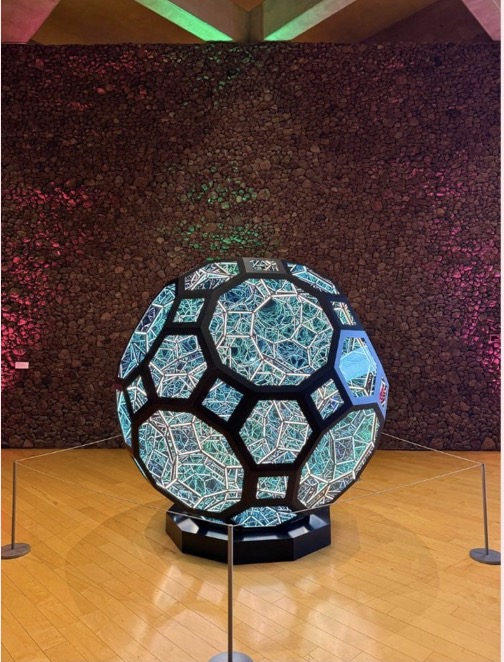
Tongue twister of a name aside, it’s pretty easy to see why this radiant, multifaceted geometric solid is one of the museum’s most beloved pieces. Created by visual artist Anthony James in 2020 as part of his prolific Portals series, the colossal 80-inch work is a hypnotically immersive array of mirrors, light, and geometry, with its corners and angles seemingly reflected into infinity. Peering inside almost feels like entering a new dimension.
ALUMINAIRE HOUSE
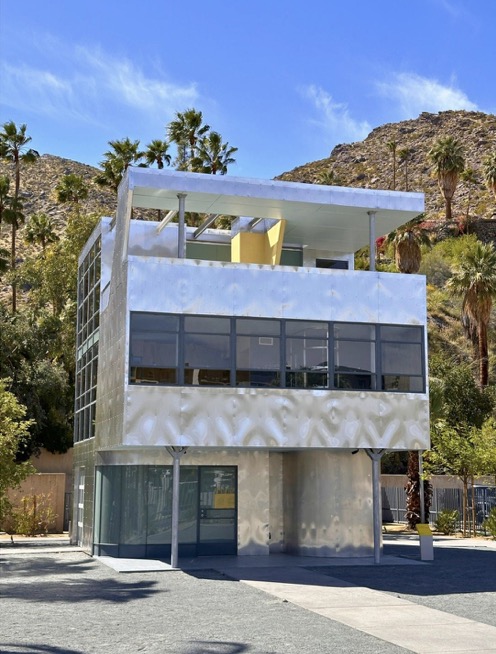
Even when it’s miserably hot outside, I can’t make a trip to the museum without popping by the Aluminaire House. Designed by Albert Frey and A. Lawrence Kocher for the 1931 Architectural and Allied Arts Exposition in New York, the three-story structure was built as an experimental example of affordable prefab living—and took just 10 days to complete. Wrapped in aluminum alloy and steel, the little house was considered a marvel of its day before eventually falling into serious disrepair. It was acquired by the museum in 2020 and, following an extensive restoration, was put on permanent display, bringing a remarkable piece of architectural history to our little corner of the desert—and thoroughly warming this architecture lover’s heart.
Thanks For Reading!
I hope this issue inspires you to make a trip to the museum. The overwhelming summer heat is the perfect excuse to spend an afternoon somewhere cool—and surrounded by art.
Take Everything PS With You
Download the app to save favorite spots, explore nearby finds, and build your desert short list on the go.